A kids room combines sleep, storage, and everyday activities in a space suited to a child’s changing needs. Furniture dimensions, clear floor space, and accessible layouts can support safer movement and independent routines. Bed design is especially important, influencing how effectively a room accommodates rest, shared sleeping, and play.
The Oeuf Perch Bunk Bed is a space-conscious sleeping option for rooms shared by siblings or used for sleepovers. Its stacked arrangement makes use of vertical space, leaving more floor area available for play or storage. A ladder and protective upper-bed rails are practical features to consider when assessing fit and age suitability.
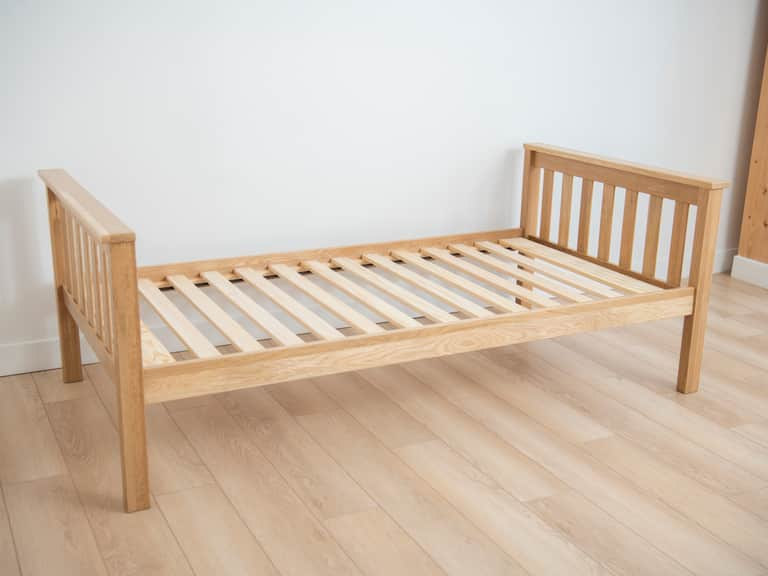
The Oeuf River Bed offers a straightforward sleeping foundation for a child’s room. Its low, simple profile can make getting into and out of bed more manageable, while a restrained design can fit a variety of room layouts. Check dimensions and mattress compatibility when planning how the bed will work within the available space.
Children’s bedding and pillows contribute to comfort and a practical sleep routine. Mattress dimensions should match the bed frame, and pillow loft and firmness are best considered in relation to the child’s age and sleeping position. Organic mattresses may appeal to families prioritising particular material standards, while down pillows have distinct softness and care requirements.
Adjustable beds can provide flexible positioning, although suitability depends on the child, frame design, and intended use. For any kids room, check assembly guidance, weight limits, guardrails, and the manufacturer’s recommended mattress type. Coordinating beds, bedding, and pillows with the room’s dimensions helps maintain usable pathways and a comfortable sleeping area.
 Furniture